
Motor Vehicle Repair
Motor Vehicle Repair
This information describes the sales and use tax topics related to the motor vehicle repair industry. Use the links in the Guide Menu to see information about that topic.
Definitions
Definitions
Some of the items and services used to repair motor vehicles are taxable, and some are exempt from sales tax. The taxability of a given item may depend on its exact use, the kind of business providing it, and how parts, materials, and service are broken down on the invoice.
The following definitions apply to this industry.
Taxable Sales
Taxable Sales
Local Sales Tax
Local Sales Tax
Some cities and counties have local sales and use taxes. If you are located in or make sales into an area with a local tax, you may owe local sales and use tax. For more information, see Local Sales and Use Taxes.
To determine the sales tax rate, use the location where the product is received by the customer, typically your business or a delivery address. You can use our Sales Tax Rate Map or Sales Tax Rate Calculator to help you determine the sales tax rate.
Note: The map and rate calculator do not include special local taxes.
For more information, see:
Repair Paint and Repair Materials
Repair Paint and Repair Materials
You may purchase repair paint and repair materials exempt for resale if they:
- Become part of the vehicle
- Are consumed in providing the vehicle repair service
To purchase repair paint or repair materials exempt, give your supplier a completed Form ST3, Certificate of Exemption. Specify the Resale exemption.
Note: If you choose not to purchase repair materials exempt for resale, you can continue to pay tax on the purchase of materials and not charge tax to your customers. See Method 3 in the Handling Sales Tax on Repair Materials section.
Examples of Repair Paint and Repair Materials
| Abrasives | Clear coat | Motor oil | Sealer |
| Acetylene | Degreasing agents | Oxygen | Solder |
| Battery water | Diagnostic dyes | Paint thinner | Solvents |
| Body paint | Glaze | Polishes | Striping tape |
| Body filler/putty | Grease | Primer | Tack cloth |
| Bolts and nuts | Grinding discs | Razor blades | Waxes |
| Brake fluid | Hydraulic jack oil | Sanding discs | Welding rods |
| Buffing pads | Lubricants | Sandpaper | |
| Chamois | Masking tape | Scuff pads |
Note: Service providers must pay sales or use tax on items used to provide repairs on multiple vehicles, such as machinery, tools, and equipment.
Handling Sales Tax on Repair Paint and Repair Materials
Handling Sales Tax on Repair Paint and Repair Materials
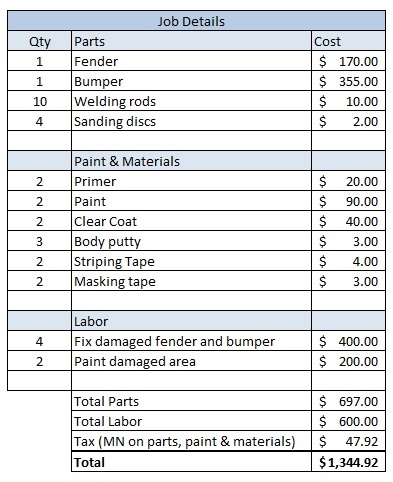
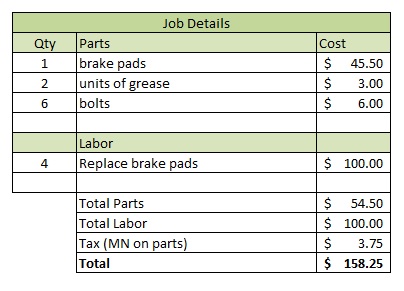
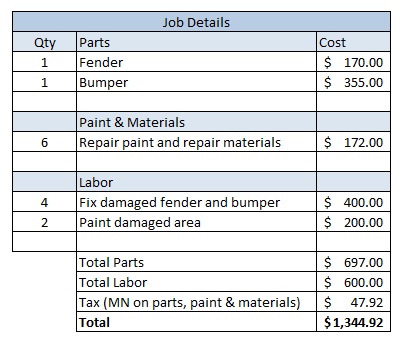
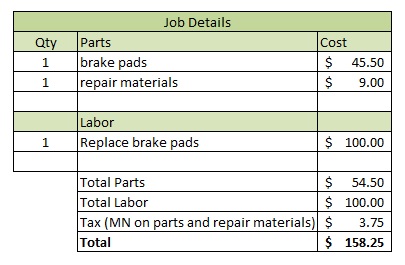
You must handle sales tax on repair paint and repair materials by using one of the following three methods listed. You must remain consistent in the method you choose.
Nontaxable Sales
Nontaxable Sales
Some motor vehicle-related sales are not taxable.
Motor Vehicle Repair Labor
Auto body and mechanical repair labor is not taxable when it is separately stated from repair parts on the invoice.
Custom Painting
Labor charges to custom paint a vehicle are not taxable. But the paint and materials used are taxable. You must either charge sales tax to your customer, or pay sales or use tax when buying these materials.
Tire Recapping and Retreading
Charges to recap or retread a tire are not taxable. These are considered vehicle repair, even if the new cap is of a different tread design (such as snow tread applied over summer tread).
Waste Disposal Fees
Charges for disposing of hazardous waste are not taxable when separately stated on the invoice.
Examples include:
- Antifreeze
- Battery fees
- Special charges for disposing of oil
- Tires
Miscellaneous Sales
Miscellaneous Sales
Sales tax may or may not apply depending on who you're selling products to.
Warranties, Recalls, and Service Contracts
Warranties, Recalls, and Service Contracts
Taxable and nontaxable items and services vary when dealing with warranties, recalls, and service contracts.
Manufacturer’s Warranty or Recall
Repair or replacement parts are not taxable when they are covered by a manufacturer’s warranty or recall.
Optional Maintenance Contracts
Optional maintenance contracts provide prepaid coverage for maintaining a vehicle. These contracts include taxable items and nontaxable repair labor for one price.
Examples include:
- Oil changes
- Tire rotation
- Wheel balancing
Optional maintenance contracts are taxable if they include any taxable items, unless the cost of those items is insignificant. The sales tax is due when the contract is sold, not when the maintenance is performed.
If an optional maintenance contract is sold with a motor vehicle, then the contract is taxed at the 6.875% general sales tax rate and applicable local taxes.
Used Car Warranty
Used car dealers in Minnesota must provide a warranty with the sale of certain used cars. If you sell such a vehicle and later make repairs under the warranty, no tax applies to the parts used in the repair.
Rebuilt Parts
Repair or replacement parts covered by a warranty or guarantee are not taxable when included in the purchase price of a rebuilt engine, transmission, etc.
Extended Warranty Contracts
Extended warranties to cover unexpected repair costs are not taxable. However, sales or use tax does apply to the parts used for contracted repairs. See the table below for details about when tax is due and who pays it.
| If the warranty states | Then you must |
|---|---|
| No cost to customer for parts | Pay sales or use tax on your cost of the parts |
| Customer is responsible for a percentage of parts and labor | Charge the customer sales tax on the amount for parts only |
| Customer pays a deductible for parts or labor | Pay sales or use tax on your cost of the parts. The deductible payment is not taxable. |
Purchases and Use Tax
Purchases and Use Tax
Legal References and Resources
Legal References and Resources
The legal references and resources related to the motor vehicle repair industry are listed.